One of the easiest ways to transform any space is by adding plants—and more importantly, displaying them in the right planters.
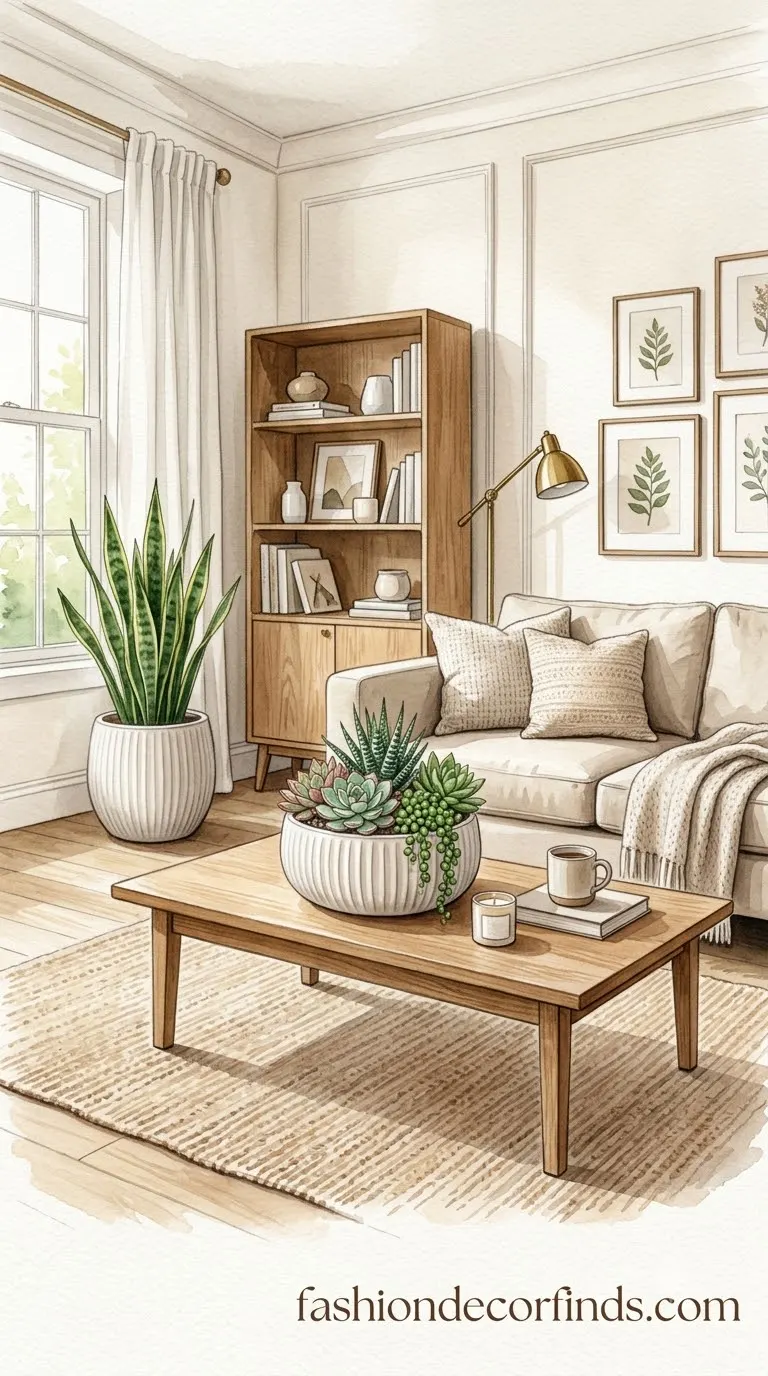
A simple snake plant in a plain plastic nursery pot may look ordinary, but place the same plant inside a textured ceramic planter or a woven basket, and it instantly becomes a statement piece.
The best part? You don’t need an interior designer to achieve this look. With the right combination of planter styles, sizes, and placement, you can create a home that feels both stylish and welcoming.
In this guide, you’ll learn:
- The best types of planters for different spaces.
- Best Plant according the Planter Style.
- Affordable planter ideas for every budget.
- Common mistakes to avoid when decorating with plants.
By the end of this guide, you’ll know exactly which planters work best in every corner of your home.
Different Types of Stylish Planters For Home
Choosing the right planter is just as important as choosing the right plant. Each material has its own appearance, durability, and ideal placement. Understanding these differences will help you select planters that not only support healthy plants but also complement your home’s decor.
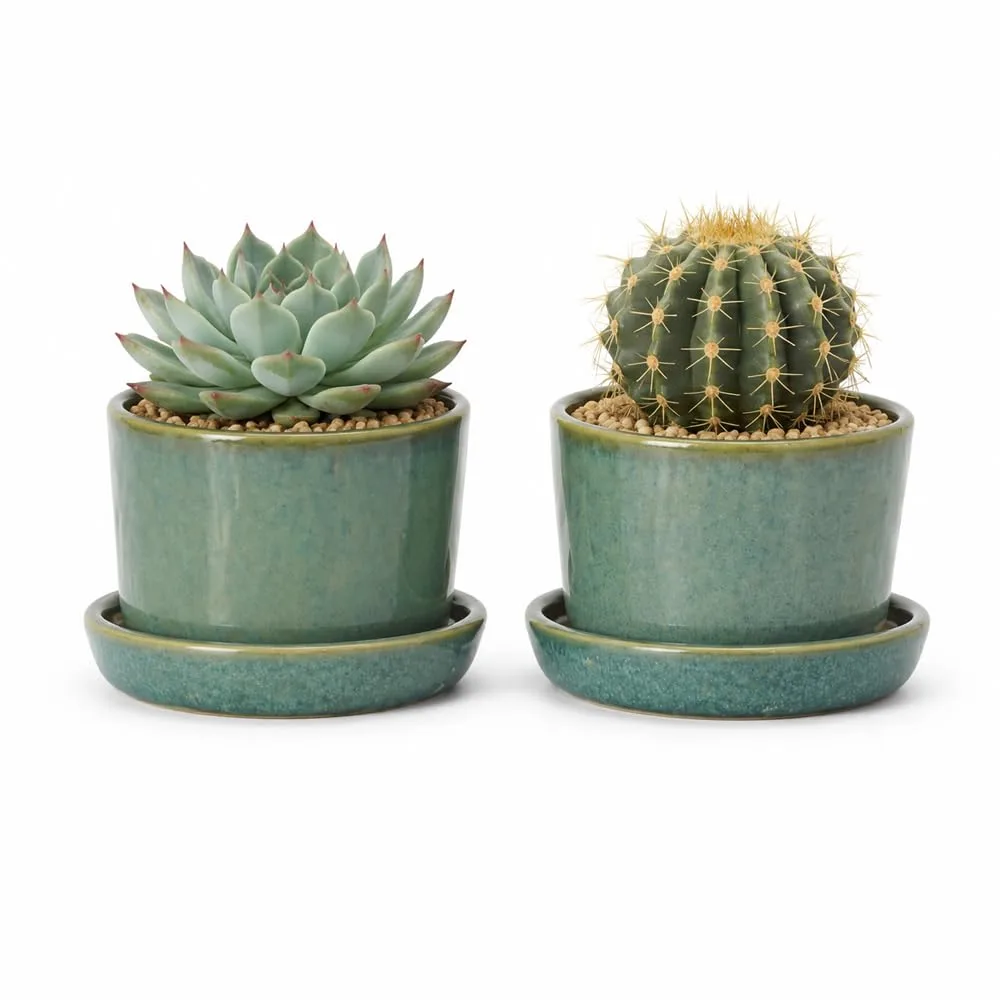
1. Ceramic Planters
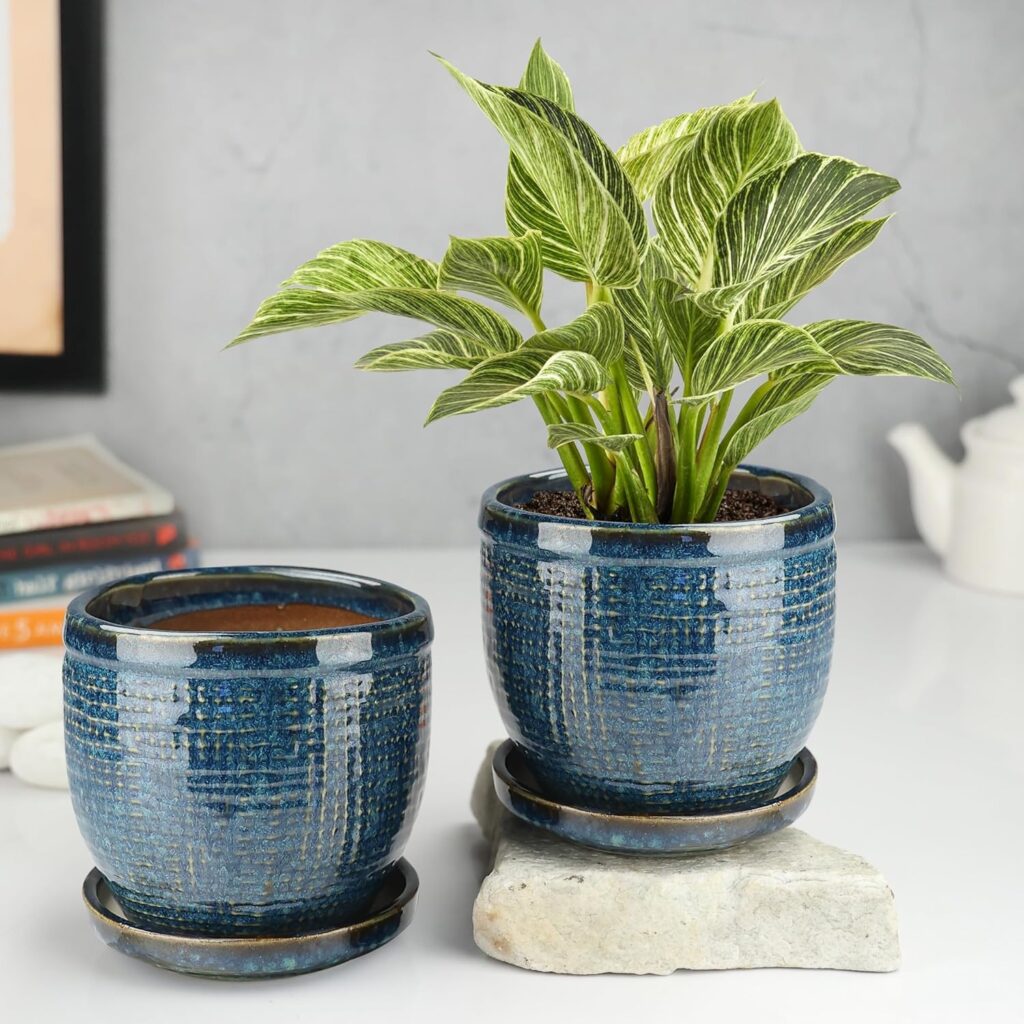
Ceramic planters are among the most popular choices for indoor decoration. Their smooth finish, elegant appearance, and variety of colors make them suitable for almost any room.
They work especially well in modern, Scandinavian, contemporary, and minimalist homes.
Best Places
Living room, Bedroom, Dining table, Coffee table, Console table, Office deskBest Plants
Snake Plant, ZZ Plant, Peace Lily, Pothos, SucculentsPros
- Elegant appearance
- Available in many colors and textures
- Heavy and stable
- Great for premium interiors
Cons
- Can break if dropped
- Slightly more expensive than plastic option
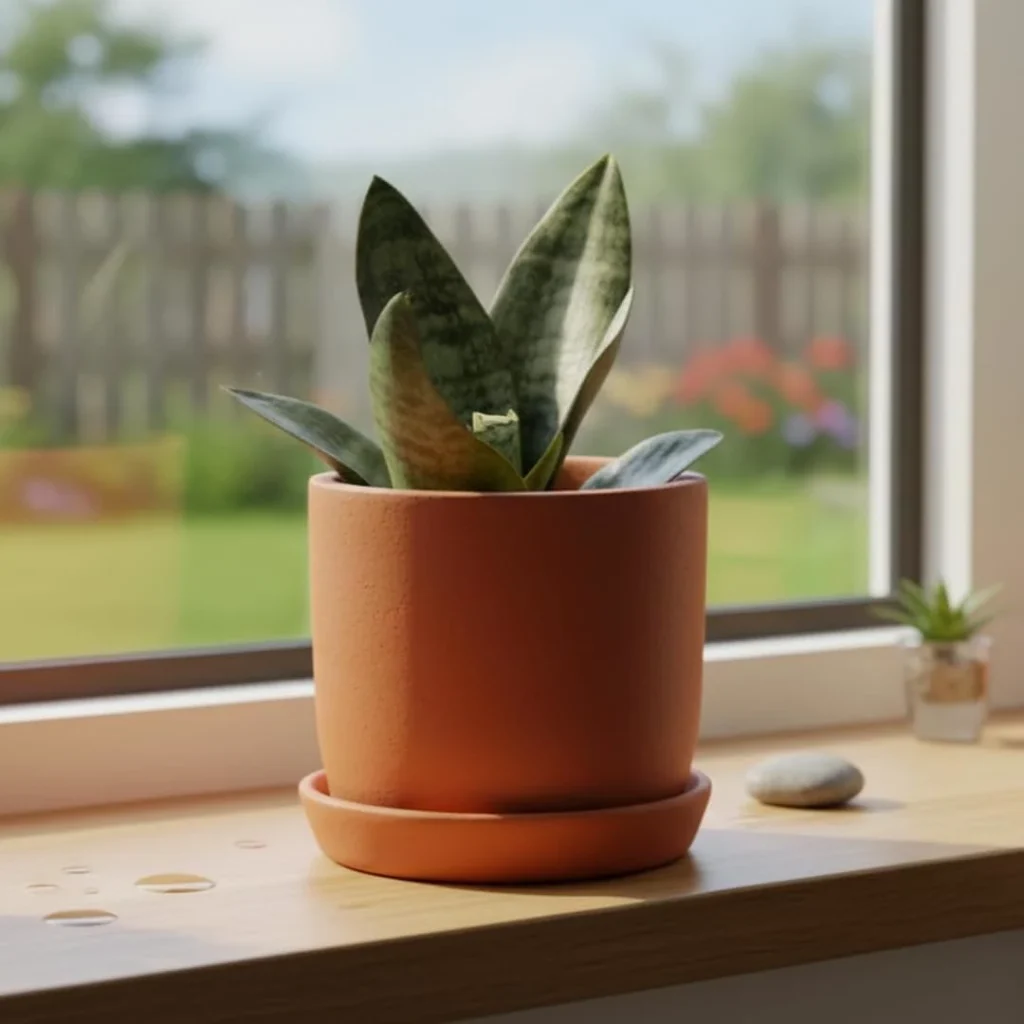
2. Terracotta Planters
If you’re looking for timeless charm and affordability, terracotta planters are hard to beat. Made from natural clay, they have a warm earthy tone that suits both traditional and modern homes.
Their porous material allows air and moisture to pass through, making them an excellent choice for many plants.
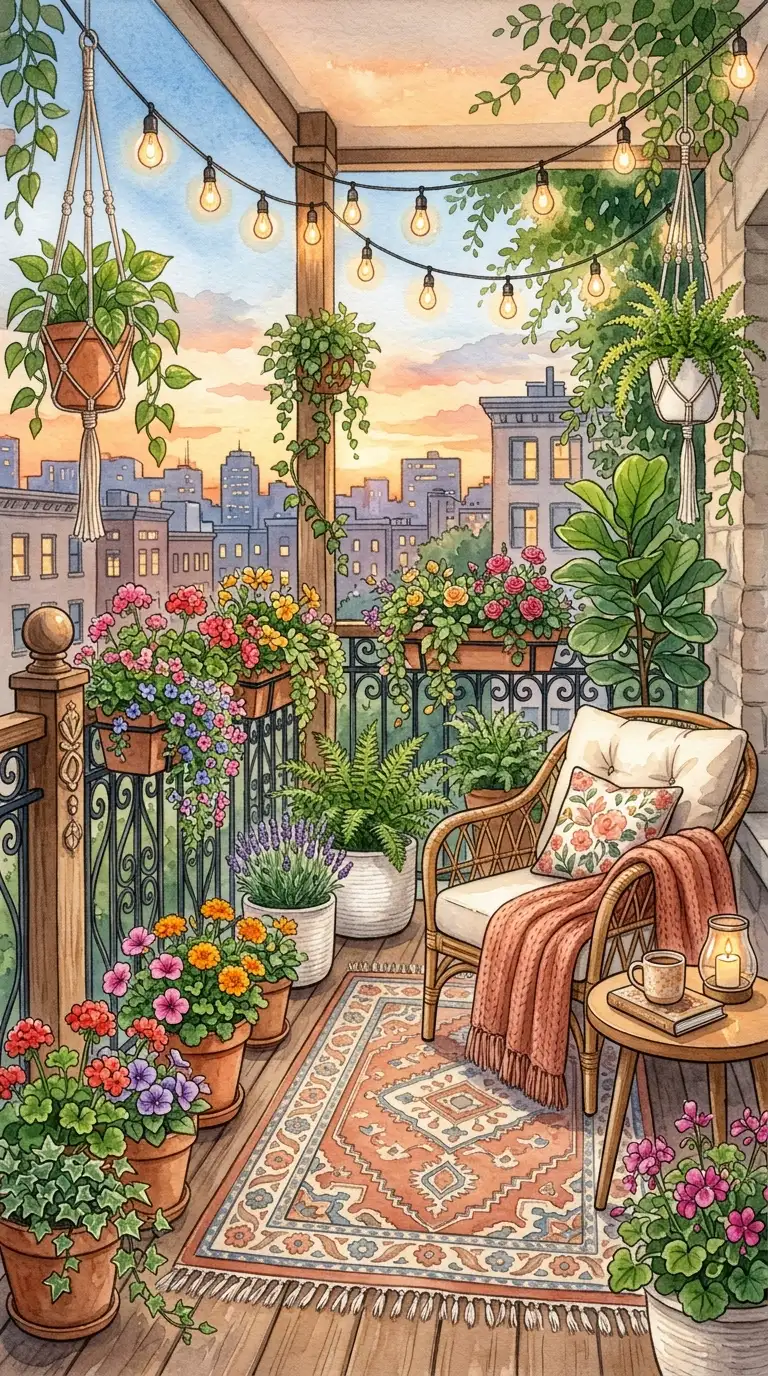
Terracotta planters are especially popular for balconies, terraces, patios, and outdoor gardens because they withstand outdoor conditions while providing good drainage.
Best Places
Balcony, Terrace, Garden, Window ledges, Outdoor seating areas
Best Plants
Herbs, Aloe Vera, Lavender, Jade Plant, Flowering plants
Pros
- Budget-friendly
- Natural rustic look
- Excellent drainage
- Durable outdoors
Cons
- Heavier than plastic pots
- Can dry out soil more quickly in hot weather
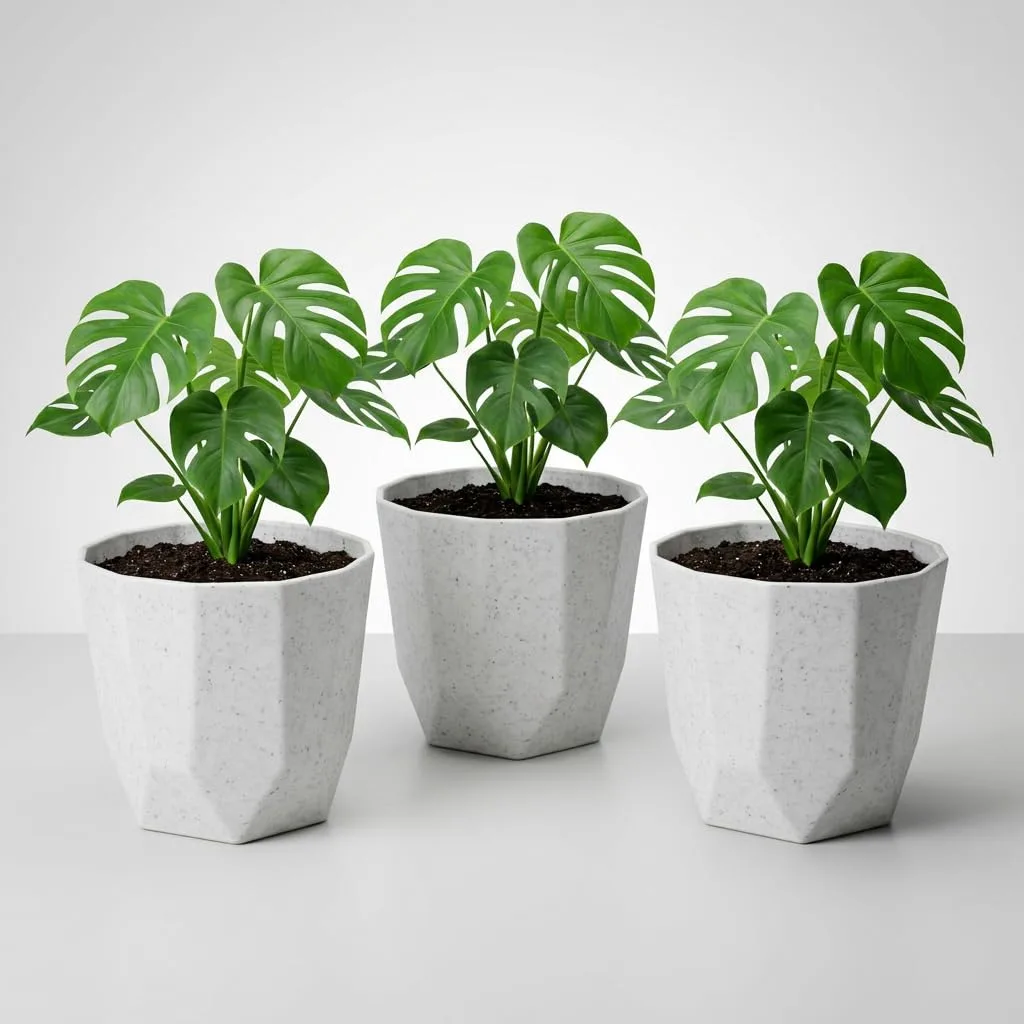
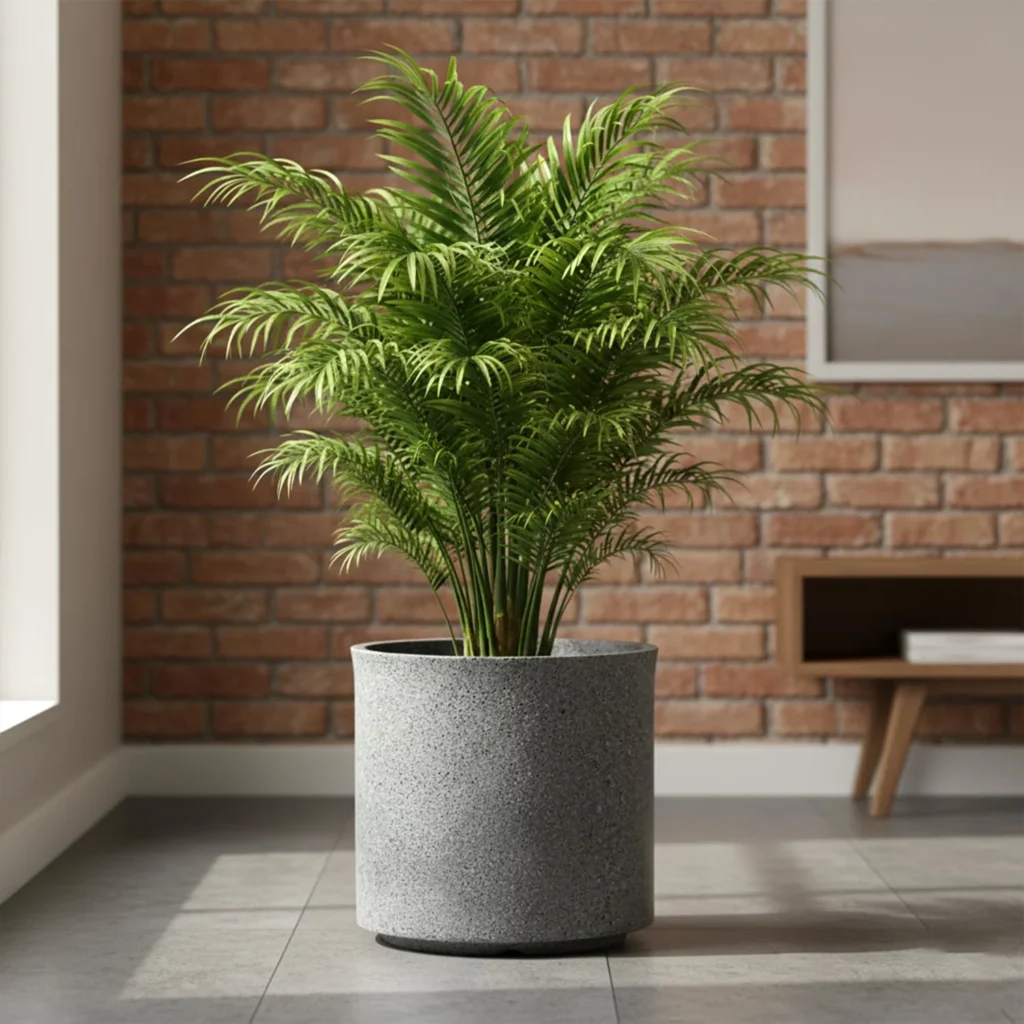
3. Cement Planters
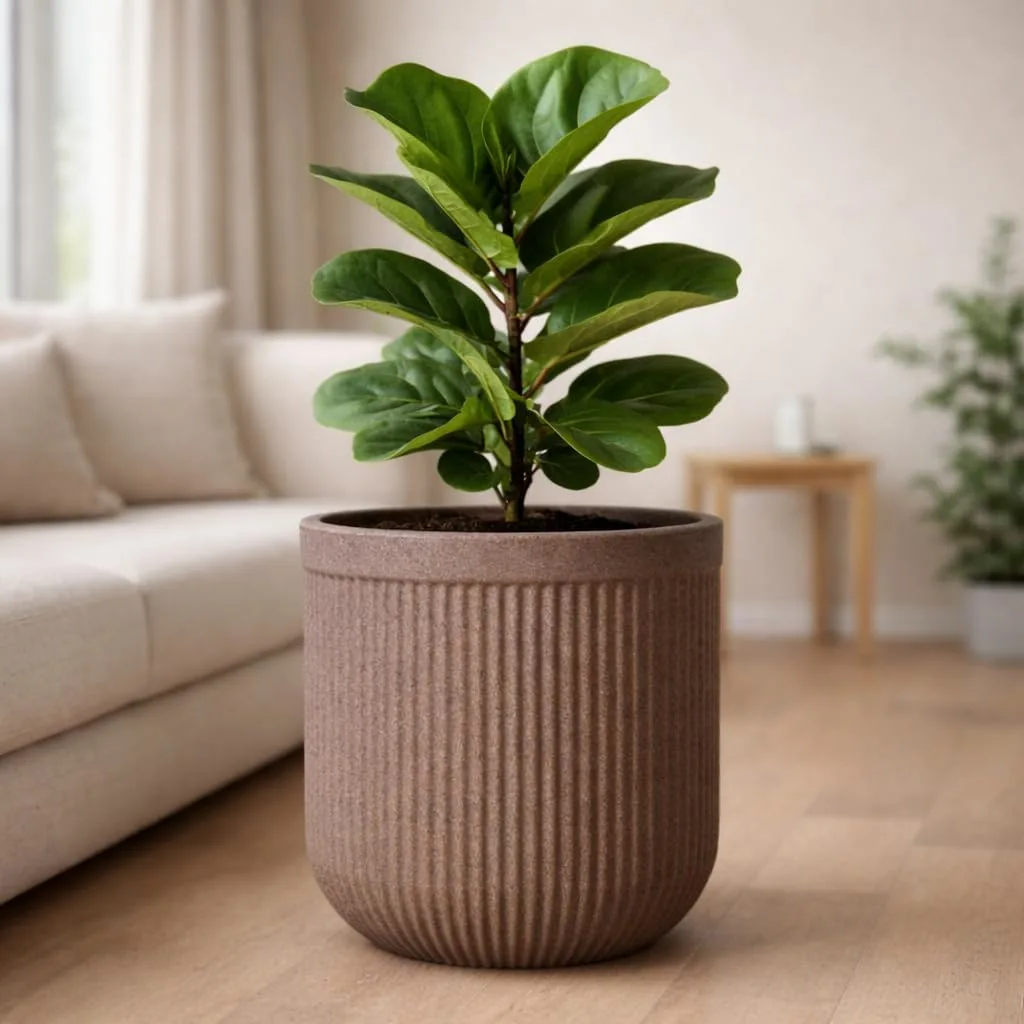
If you love modern interiors with a clean and sophisticated look, cement planters are an excellent choice. Their solid construction, neutral tones, and minimalist appearance make them a favorite among interior designers.
Unlike colorful decorative pots, cement planters create a calm, understated aesthetic that allows your plants to stand out while adding subtle texture to your space. They pair beautifully with industrial, Scandinavian, Japandi, and contemporary home decor styles.
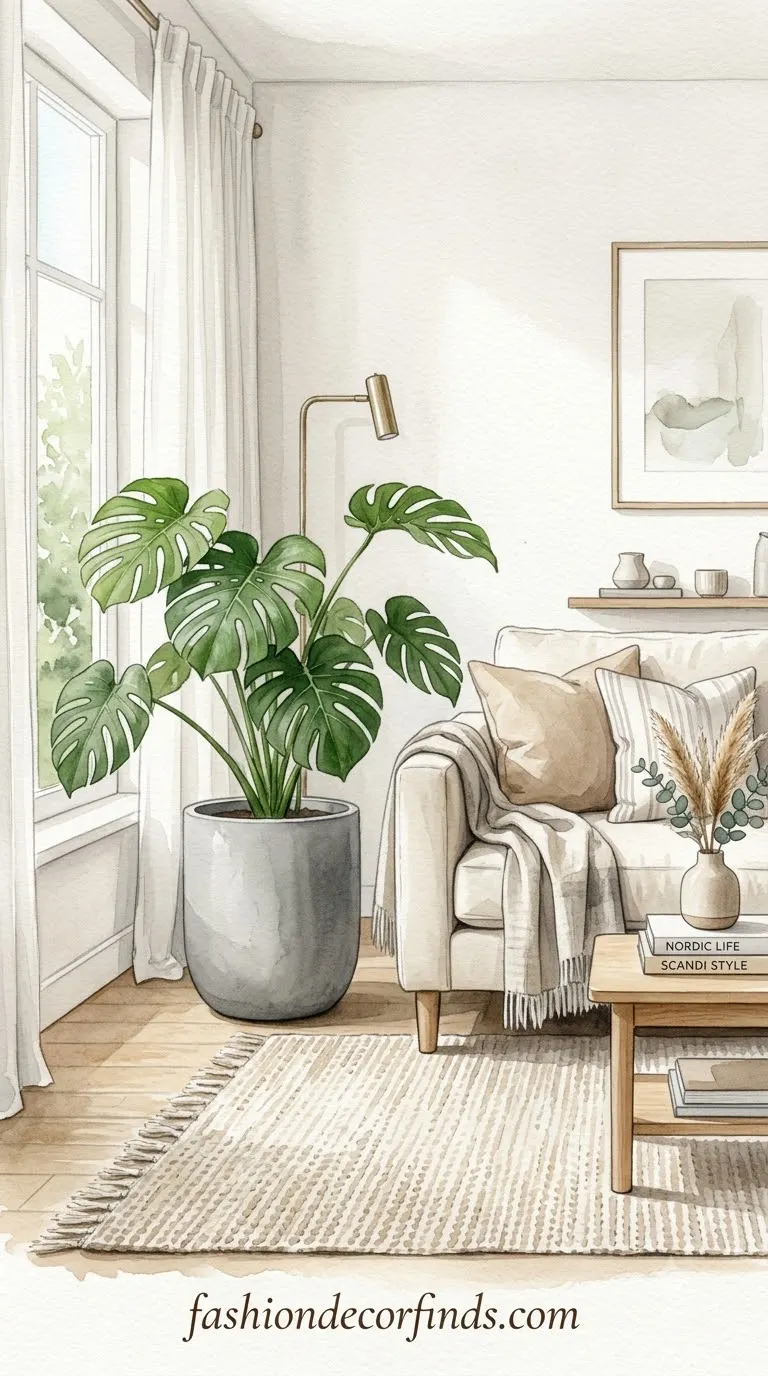
Because of their weight, cement planters are also ideal for large indoor plants that require extra stability.
Best Places
Living room corners, Entryway, Office, Balcony, Beside TV unit
Best Plants
Fiddle Leaf Fig, Rubber Plant, Monstera, Areca Palm, Bird of Paradise
Pros
- Modern and luxurious appearance
- Extremely durable
- Stable for tall plants
- Weather resistant
- Perfect for indoor and outdoor use
Cons
- Heavy to move
- Slightly more expensive than plastic planters
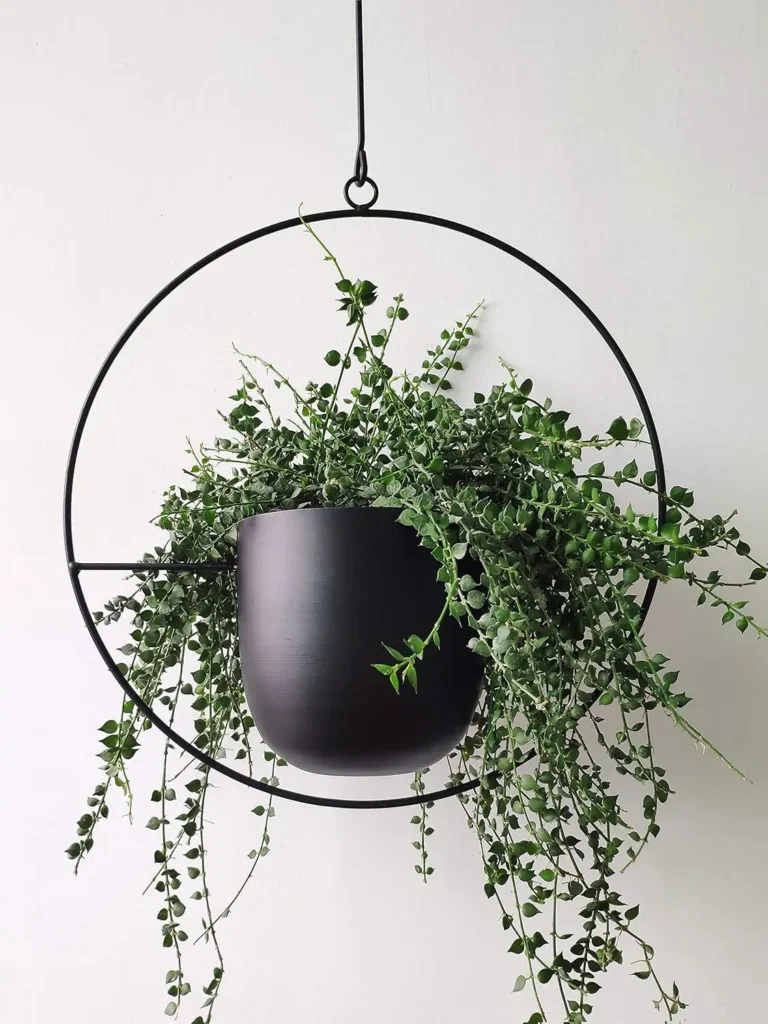
4. Metal Planters
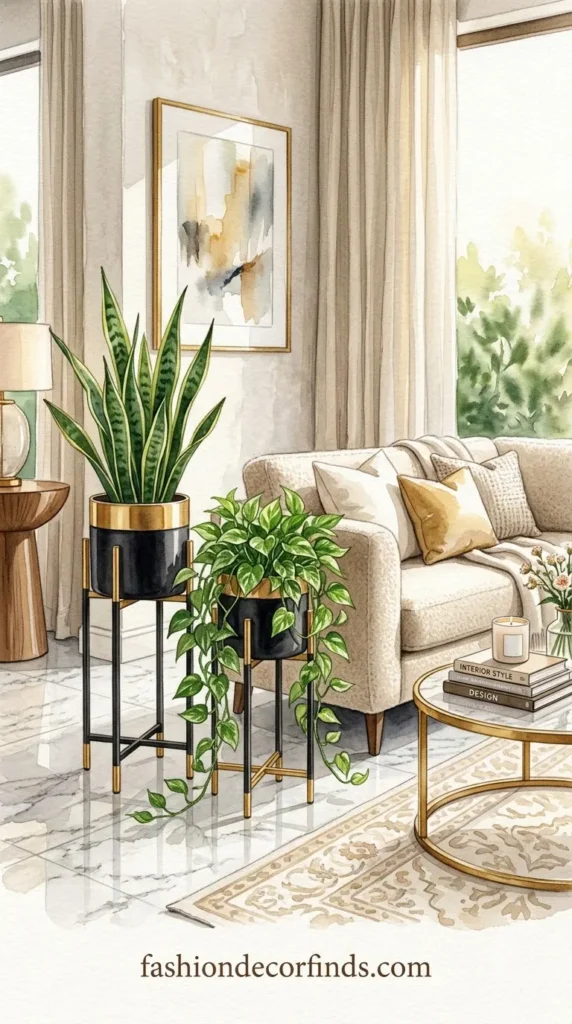
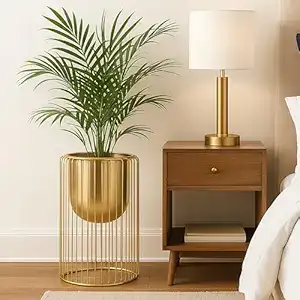
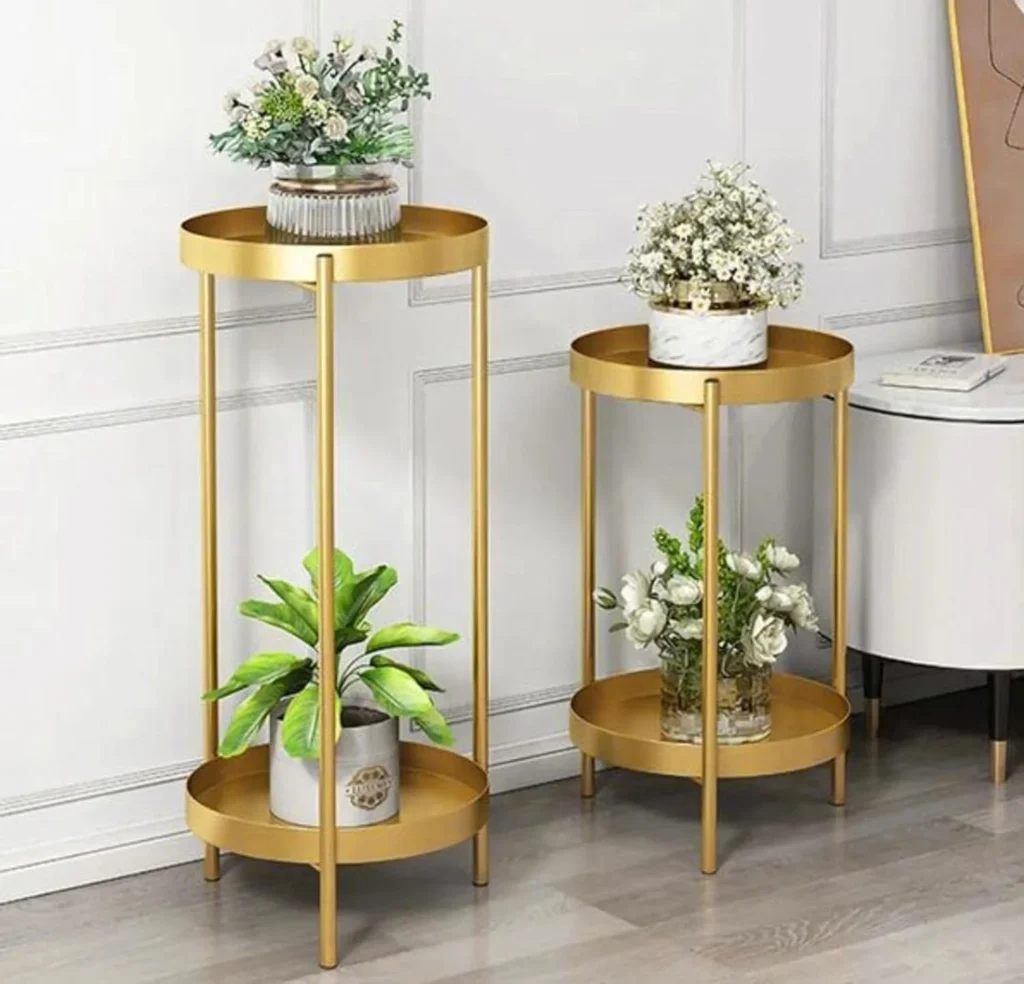
Metal planters instantly add elegance and sophistication to a home. Available in matte black, gold, brass, and copper finishes, they work beautifully in luxury, contemporary, and glam interiors.
Many decorative metal planters are paired with stylish stands that elevate plants while creating visual interest.
Since untreated metal can rust, they’re best used indoors or in covered outdoor areas.
Best Places
Living room, Office, Bedroom, Entryway, Console table, Dining room
Best Plants
Snake Plant, ZZ Plant, Pothos, Philodendron, Peace Lily
Pros
- Elegant and luxurious
- Modern appearance
- Lightweight
- Great for decorative styling
- Available with stylish stands
Cons
- Can rust if exposed to rain
- Not ideal for prolonged outdoor use
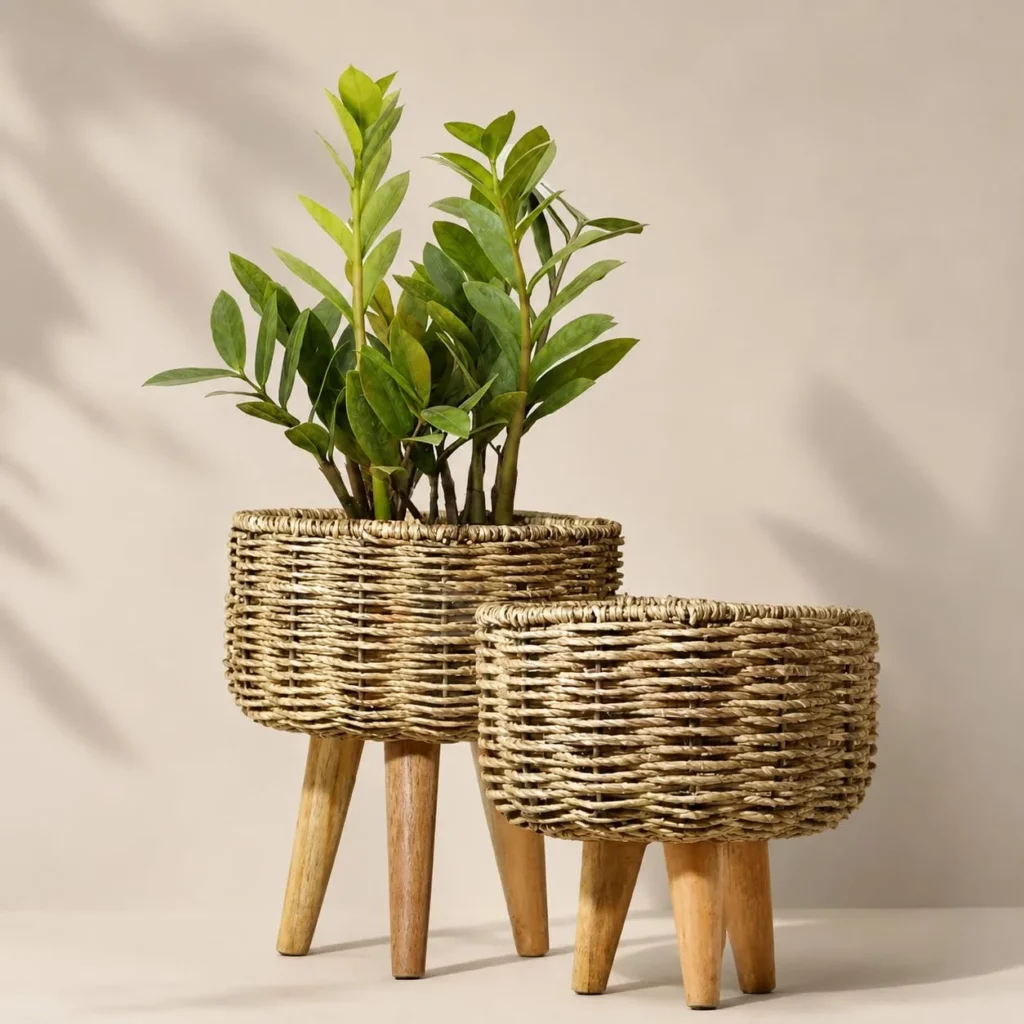
5. Wooden Planters
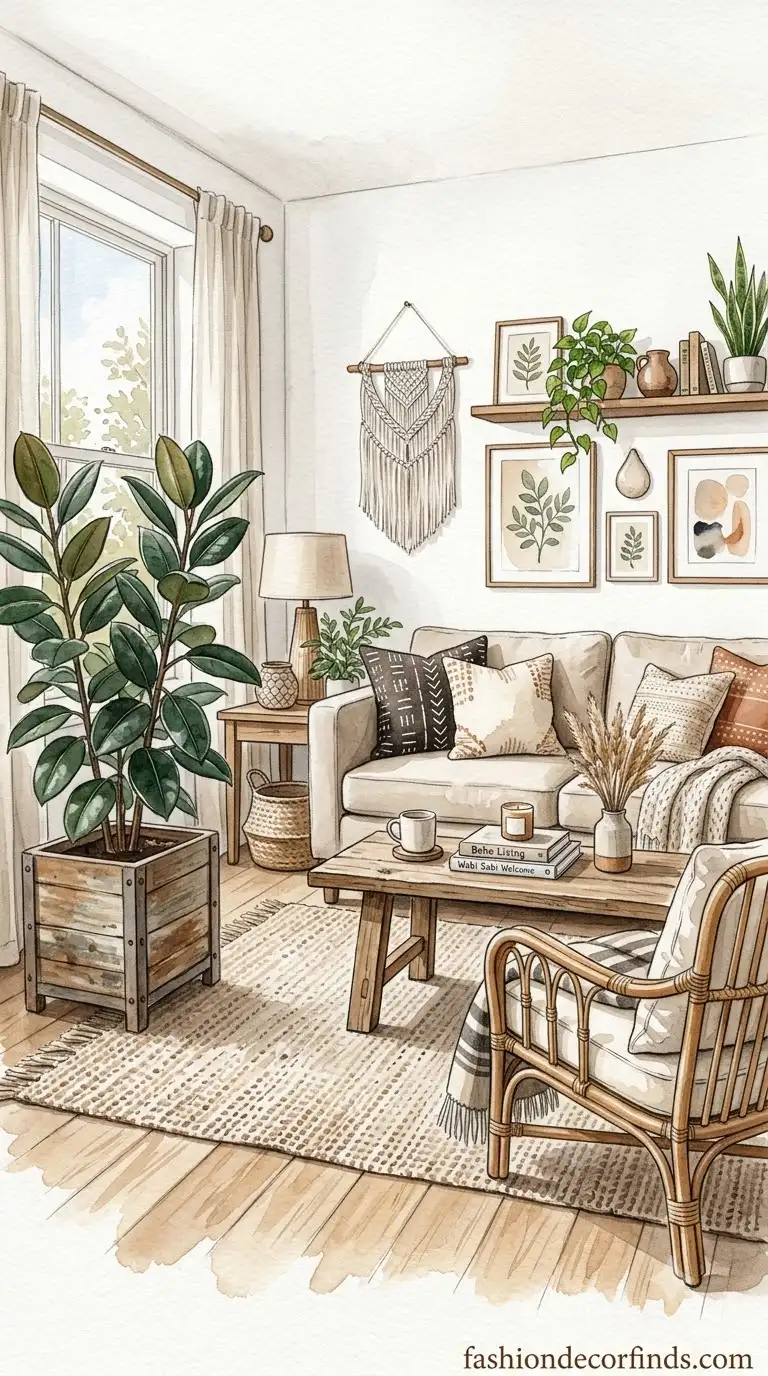
Wooden planters bring warmth, texture, and a natural feel to any room. Their earthy finish complements both indoor plants and wooden furniture, making them a favorite for cozy homes.
Whether you’re decorating a farmhouse-style home or a modern apartment, wooden planters blend beautifully with natural materials like jute rugs, linen curtains, and wicker furniture.
Many wooden planters also include hidden plastic liners, protecting the wood while making maintenance easier.
Best Places
Living room, Balcony, Reading corner, Entryway, Bedroom
Best Plants
Rubber Plant, Areca Palm, Money Plant, Bamboo Palm, Ferns
Pros
- Warm natural appearance
- Eco-friendly look
- Matches wooden furniture
- Perfect for boho and rustic decor
Cons
- Requires protection from excess moisture
- Needs occasional maintenance
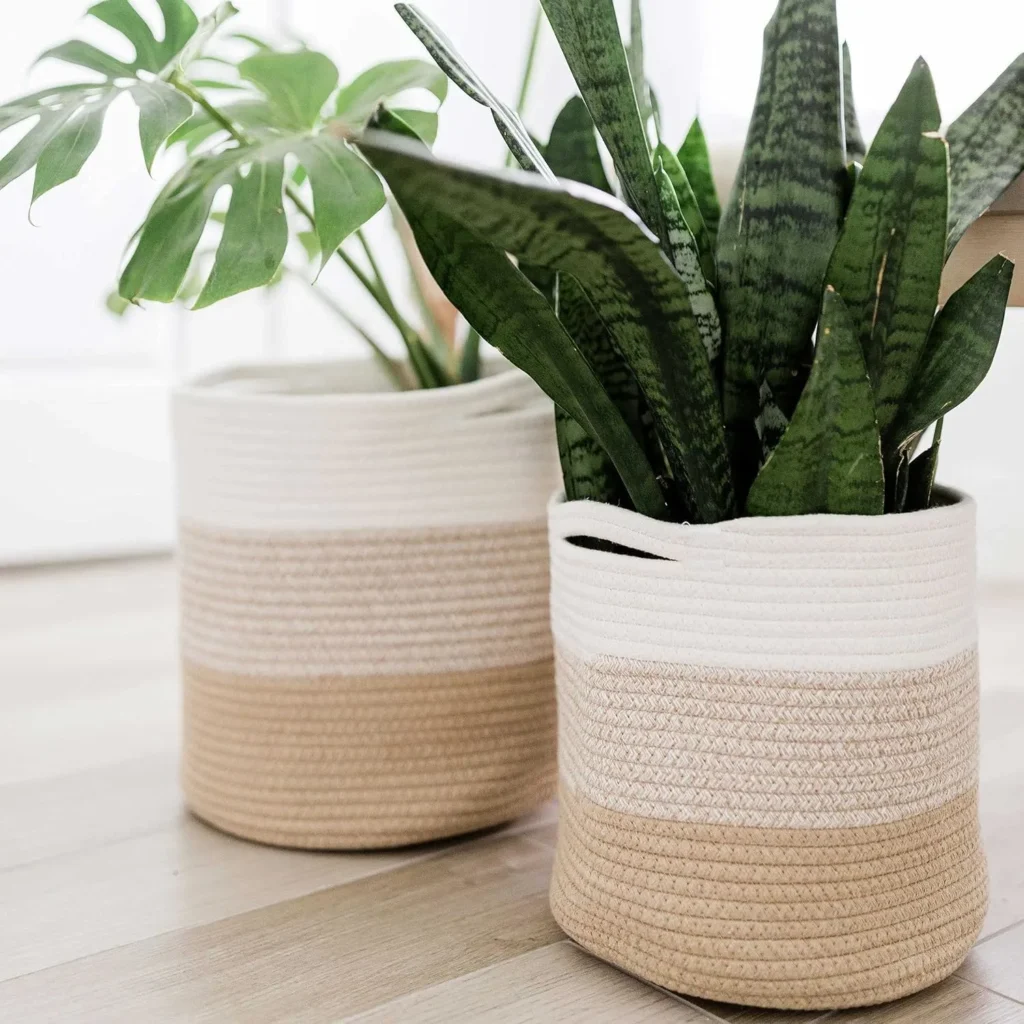
6. Woven Basket Planters
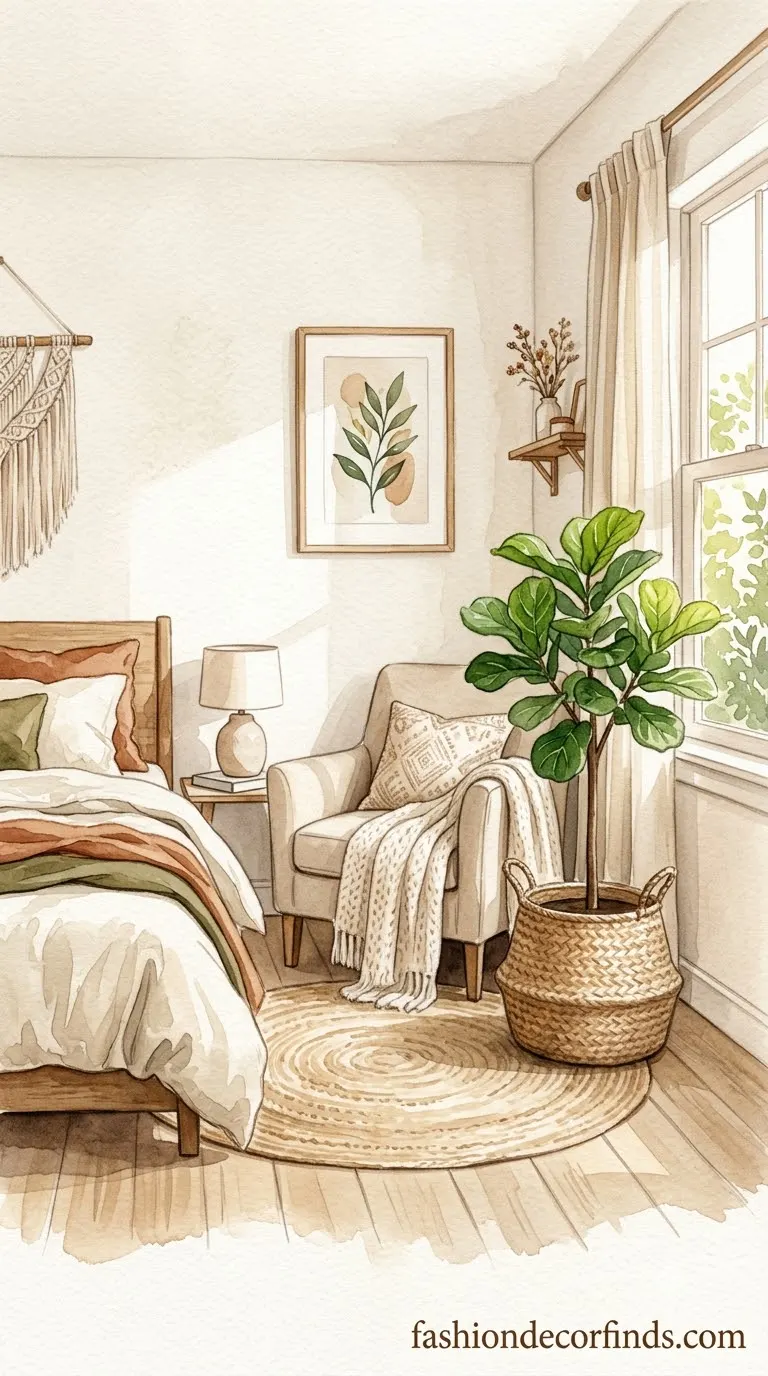
If you love cozy Pinterest-inspired homes, woven basket planters are a must-have.
Made from materials like seagrass, jute, wicker, or water hyacinth, these planters instantly soften a room while adding warmth and texture.
They’re especially popular in Scandinavian, bohemian, coastal, and minimalist interiors.
Most woven baskets act as decorative covers, with the plant remaining inside its nursery pot.
Best Places
Bedroom, Living room, Reading corner, Nursery, Entryway
Best Plants
Fiddle Leaf Fig, Monstera, Snake Plant, Palm, Rubber Plant
Pros
- Beautiful handcrafted appearance
- Lightweight
- Adds warmth
- Perfect for cozy interiors
- Budget-friendly
Cons
- Decorative only
- Not waterproof
- Needs an inner pot
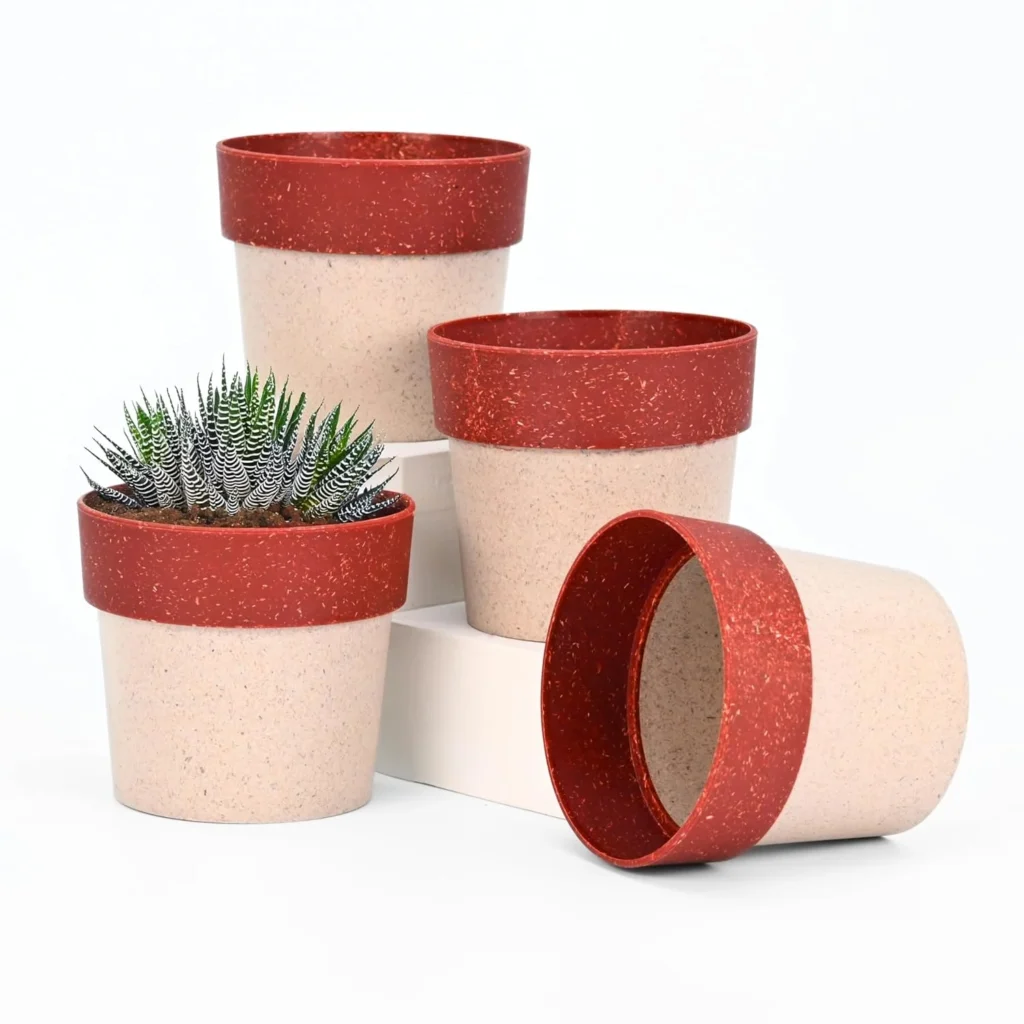
7. Fiber Planters
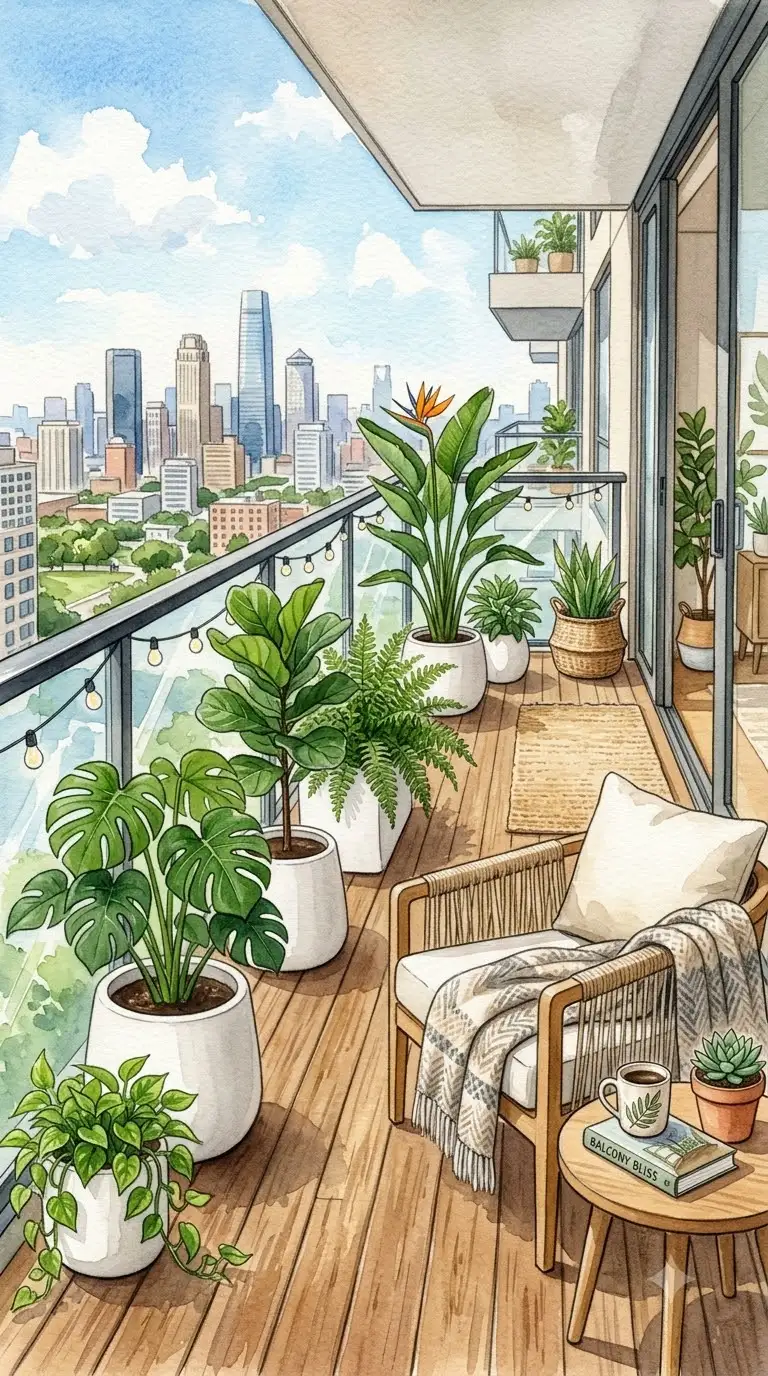
Fiber planters are one of the most practical options for modern homes. Made from fiberglass or composite materials, they combine durability with a sleek appearance.
Unlike cement planters, fiber planters are lightweight, making them ideal for balconies, terraces, and large indoor plants that may need occasional repositioning.
Many premium fiber planters mimic the appearance of stone, concrete, or ceramic while weighing significantly less.
Best Places
Balcony, Terrace, Garden, Living room, Office, Entrance
Best Plants
Areca Palm, Bird of Paradise, Rubber Plant, Dracaena, Bamboo Palm
Pros
- Lightweight
- Weather resistant
- Modern appearance
- Easy to move
- Durable
Cons
- Premium designs can be expensive
- May feel less natural than clay or wood
Budget-Friendly Planter Ideas
Decorating with planters doesn’t have to be expensive. With a little creativity, you can style your home beautifully while staying within your budget.
Under ₹500
Under ₹1000
Under ₹1500
Common Planter Styling Mistakes to Avoid
Even beautiful planters can look out of place if they’re not styled thoughtfully. Here are some common mistakes and how to avoid them.
1. Using Only One Planter Style
If every planter in your home is identical, your decor can feel flat and repetitive. Instead, mix different heights, shapes, and textures while keeping a consistent color palette.
2. Choosing the Wrong Size
Tiny pots in large rooms often look lost, while oversized planters can overwhelm compact spaces. Always consider the scale of the room.
3. Ignoring Empty Corners
Empty corners are perfect opportunities for large statement plants in decorative floor planters.
4. Overcrowding Plants
Less is often more. A few well-placed planters create a cleaner and more elegant look than dozens of scattered pots.
5. Forgetting Height Variation
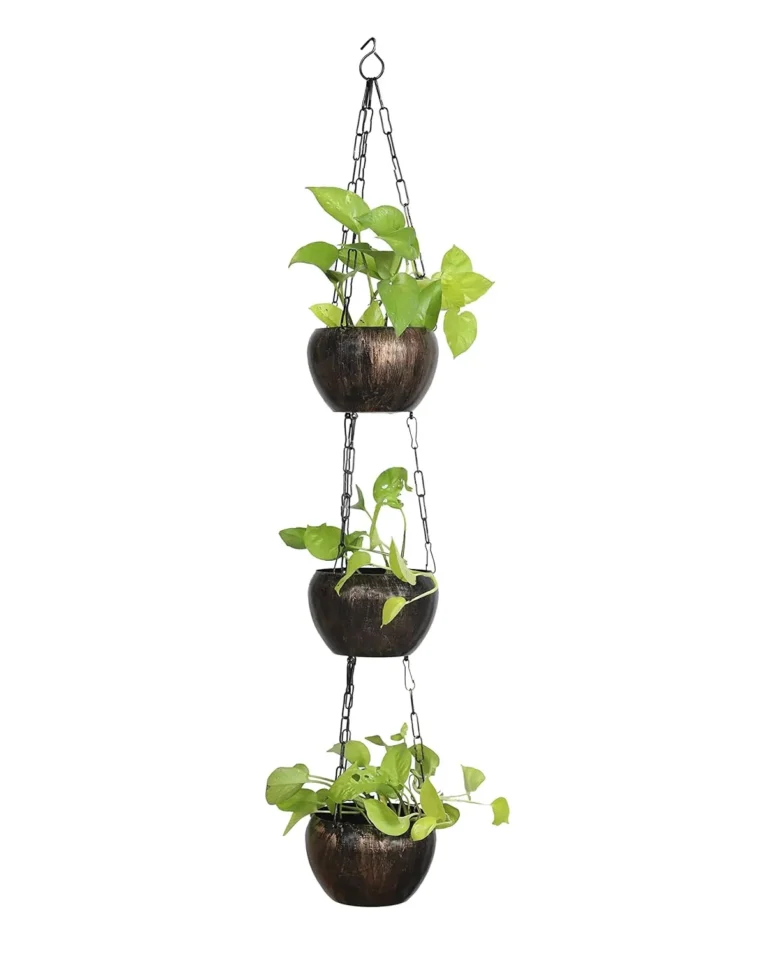
Use plant stands, hanging planters, and floor planters together to create visual depth.
Frequently Asked Questions (FAQ)
Q1. Which type of planter is best for indoor plants?
Ceramic planters are one of the best choices for indoor plants because they are stylish, durable, and available in various colors and designs. Fiber, wooden, and woven basket planters are also excellent options depending on your home’s decor style.
Q2. Which planter is best for a balcony?
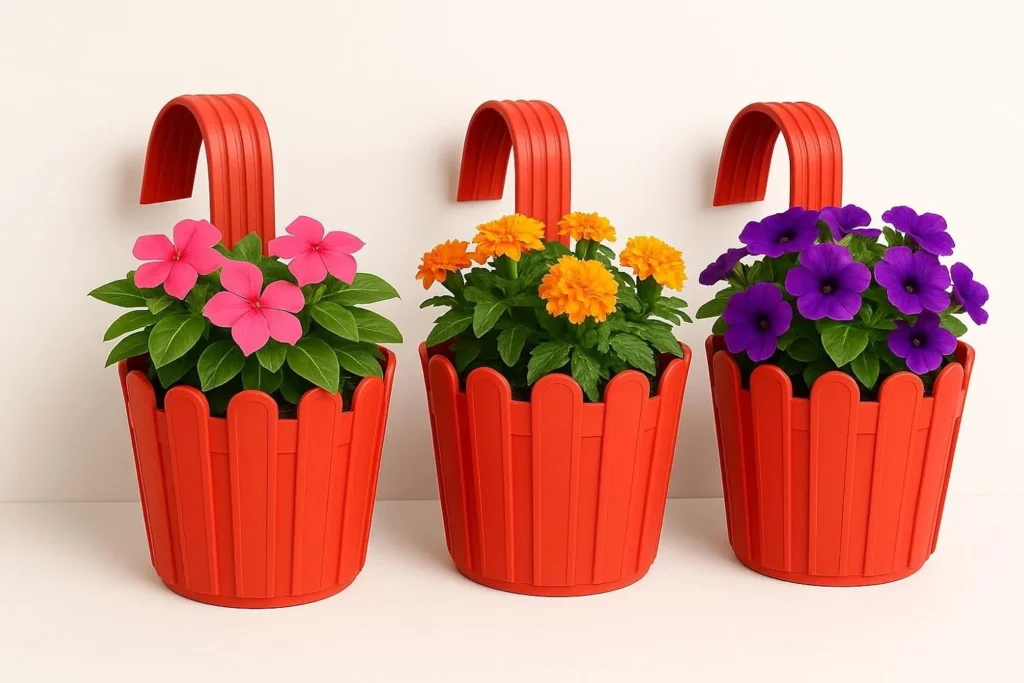
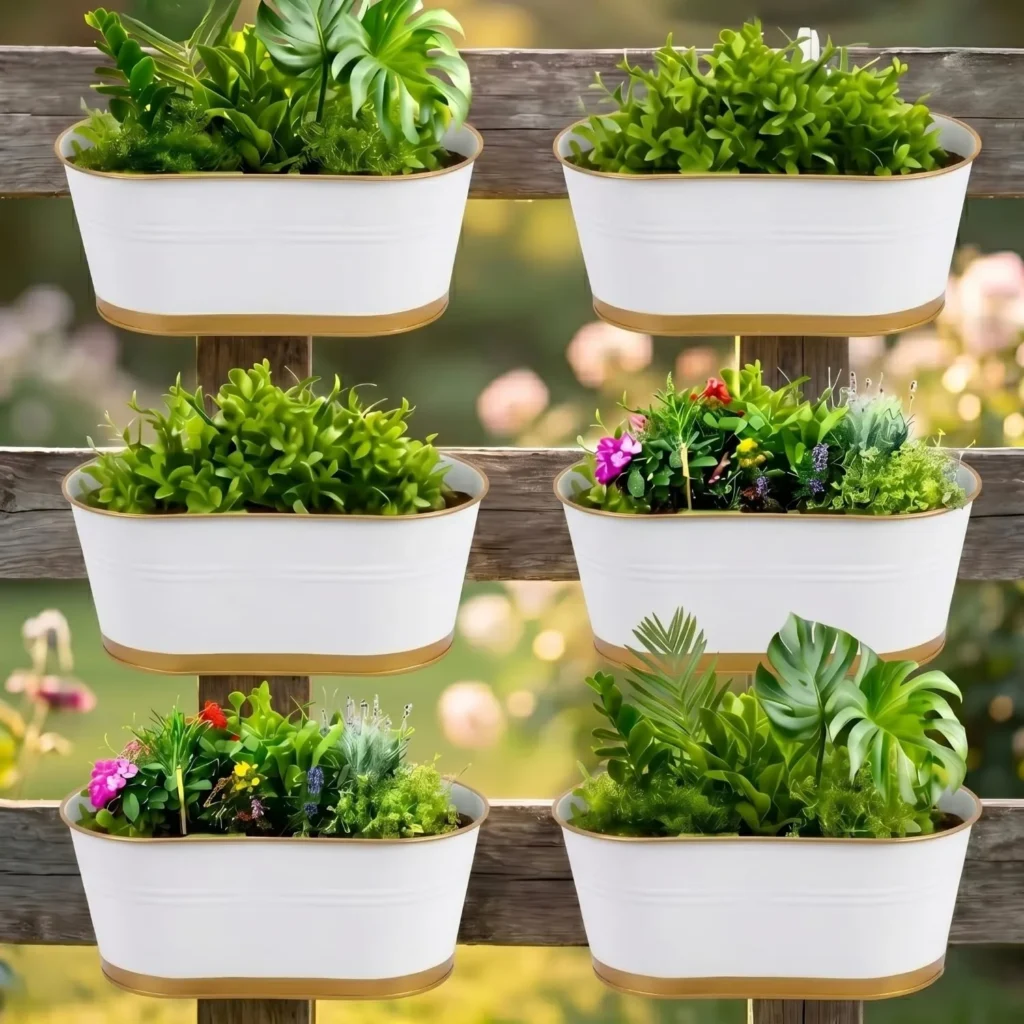
Fiber and terracotta planters are ideal for balconies because they are weather-resistant, durable, and suitable for outdoor conditions. Railing and hanging planters are perfect for maximizing small balcony spaces.
Q3. Are ceramic planters better than plastic planters?
Ceramic planters offer a premium appearance and blend beautifully with home decor. Plastic planters are lightweight and affordable but are generally less decorative. For indoor styling, ceramic planters are often preferred.
Q4. Which planter material lasts the longest?
Fiber and cement planters are among the most durable options. They resist weather, maintain their appearance for years, and are suitable for both indoor and outdoor use.
Q5. What size planter should I buy?
Choose a planter that is 2–4 inches wider than your plant’s current nursery pot. This provides enough space for root growth without increasing the risk of overwatering.
Q6. Can decorative planters be used without drainage holes?
Yes. Simply keep the plant in its nursery pot and place it inside the decorative planter. This protects the roots while maintaining a clean, stylish appearance.
Q7. Which planter is best for a modern living room?
Minimalist ceramic, matte cement, or fiber planters in white, beige, black, or stone finishes complement modern interiors beautifully.
Q8. Which planter is best for a small apartment?
Wall-mounted planters, hanging baskets, window planters, and vertical garden systems help save floor space while adding greenery.
Q9. How do I style multiple planters together?
Group planters in odd numbers (3 or 5), vary their heights, and mix materials like ceramic, wood, and woven baskets while keeping a consistent color palette.
Q10. Which plants look best in decorative planters?
Some of the most popular choices include:
- Snake Plant
- Monstera
- Fiddle Leaf Fig
- ZZ Plant
- Peace Lily
- Pothos
- Rubber Plant
- Areca Palm

Share via: